PRIVATE DRAFT — LANL-related material is being reviewed for external-use permissions. Do not distribute yet.
Detector case study

Coherent CAPTAIN-Mills — CCM200

Large liquid-argon scintillation detector construction, integration, commissioning, monitoring, troubleshooting and operations at the Lujan Center.

~10-ton LAr detector200 PMTsConstructionCommissioningDAQ / Monitoring
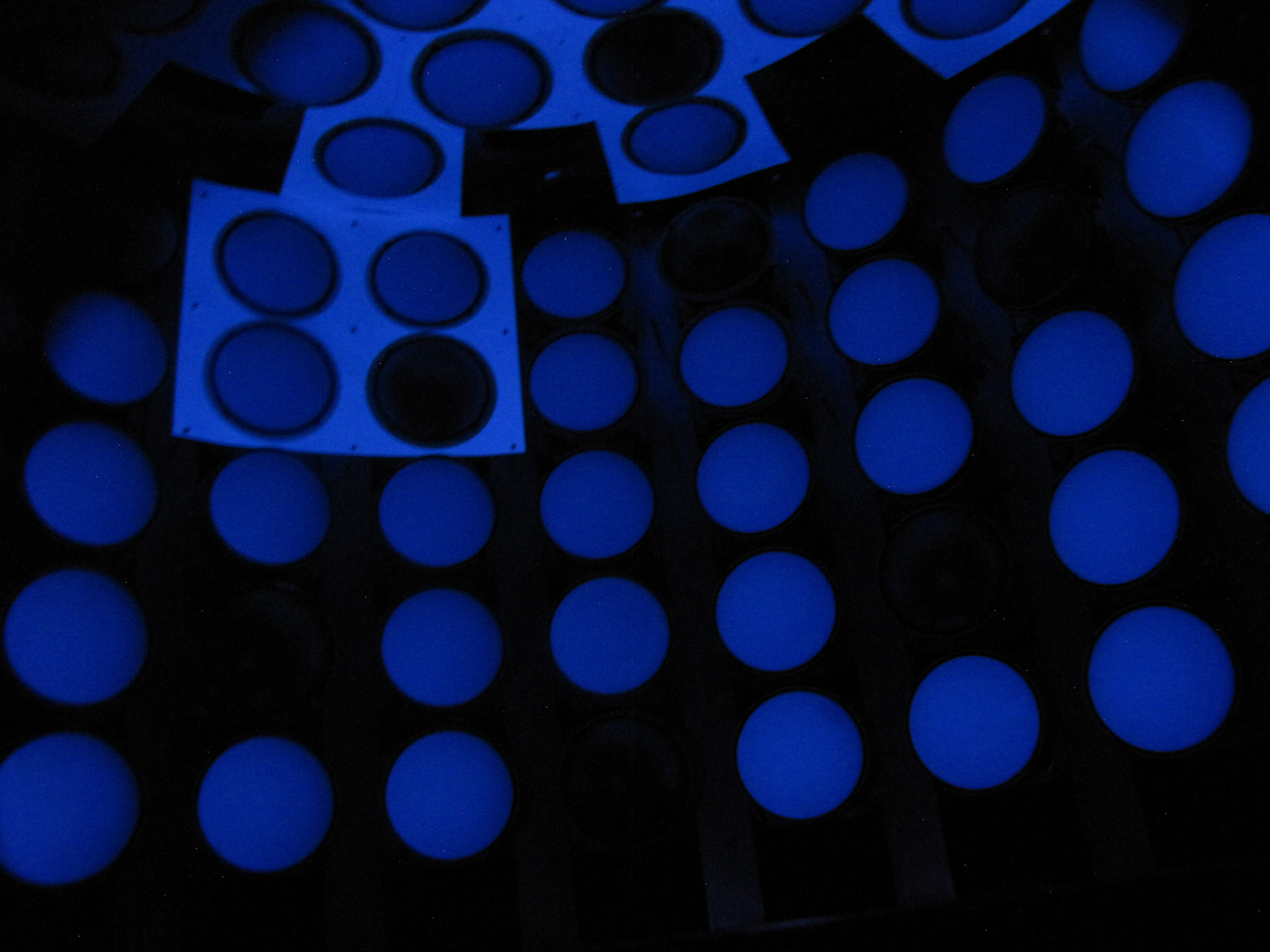
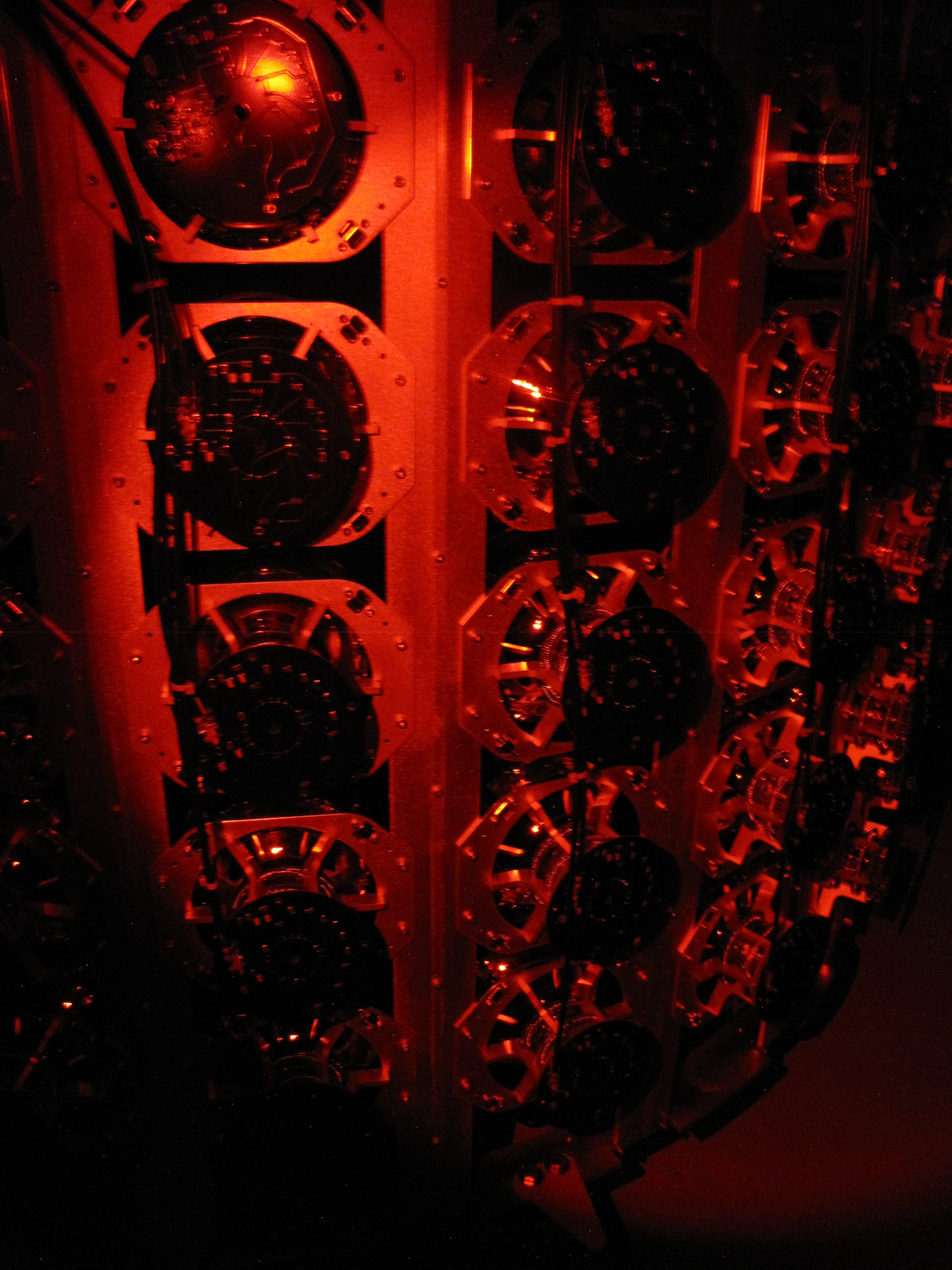
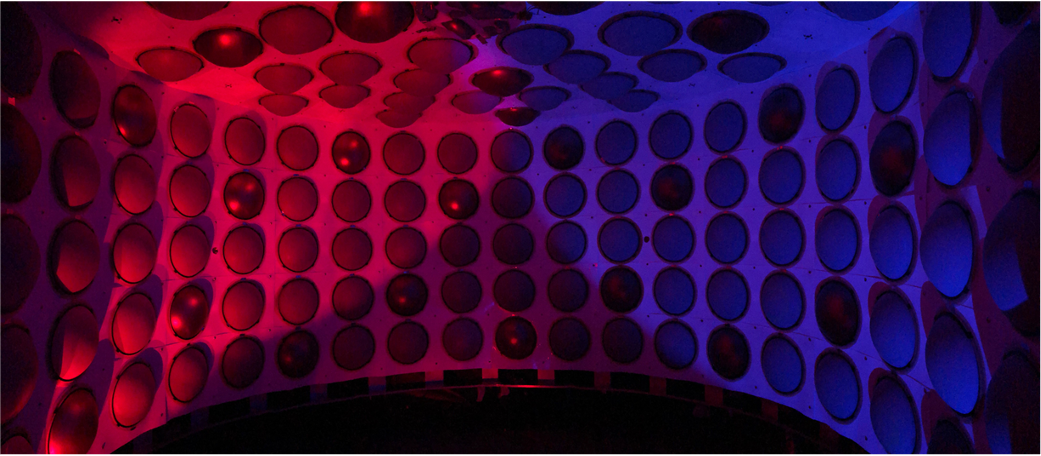
Interior of the CCM detector illuminated in red and blue
What is CCM200?

A liquid-argon detector searching for accelerator-produced new physics

Coherent CAPTAIN-Mills (CCM200) is a large liquid-argon scintillation detector located at the Lujan Center at LANSCE. An 800 MeV pulsed proton beam strikes a tungsten target, producing the stopped-pion neutrino source used by the experiment to search for sterile neutrinos and accelerator-produced sub-GeV dark-matter signals. The detector can be moved to different source-to-detector distances to probe distance-dependent neutrino oscillations.

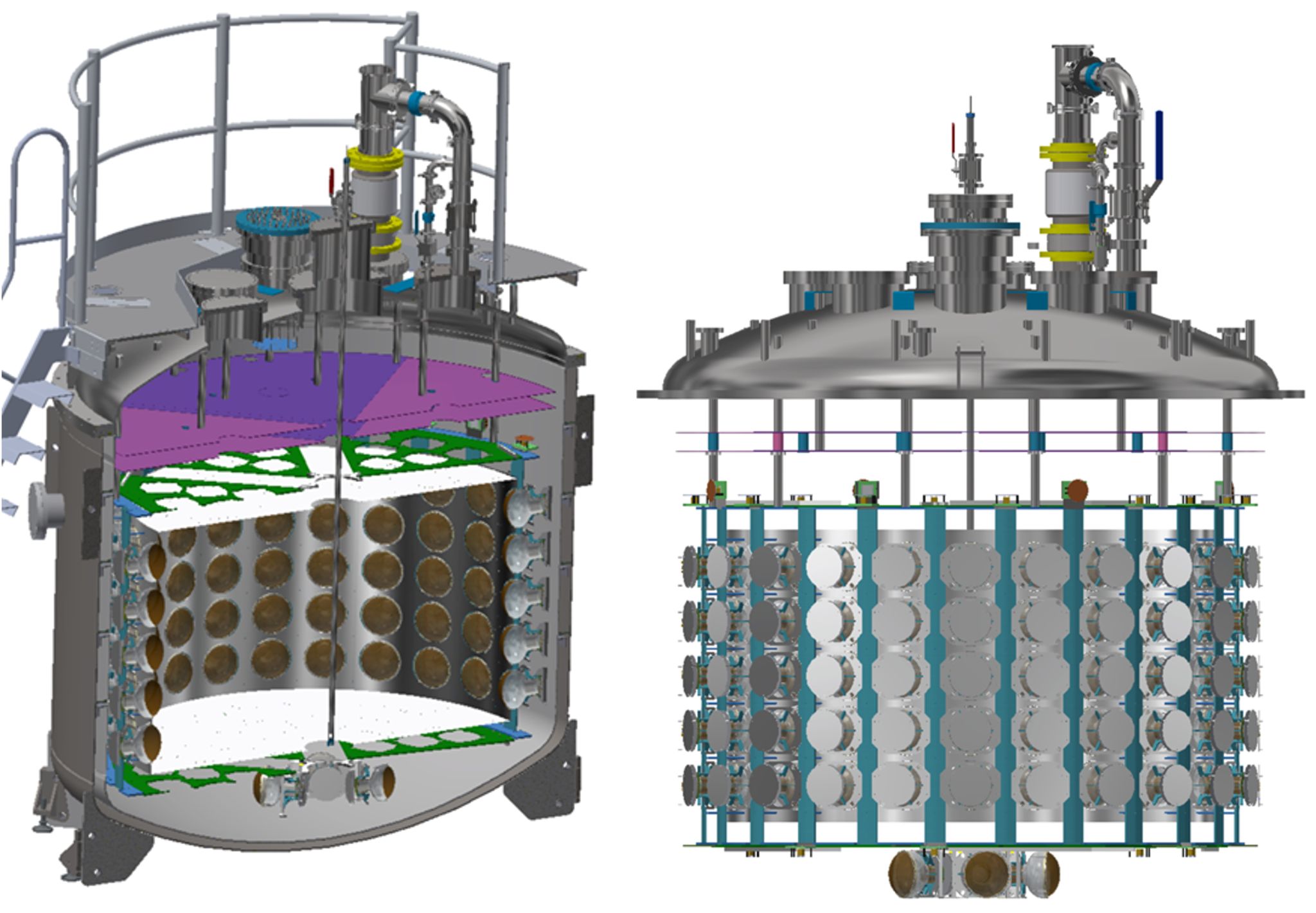
A 10-ton liquid argon volume is surrounded by 200 8-inch, 9-stage photomultiplier tubes (PMTs). Particle interactions in the argon produce 128 nm scintillation light. Tetraphenyl butadiene (TPB)-coated reflector foils and TPB-coated PMT bulbs wavelength-shift that ultraviolet light into wavelengths the PMTs can detect, allowing the optical response to be digitized by the DAQ and reconstructed as detector events.

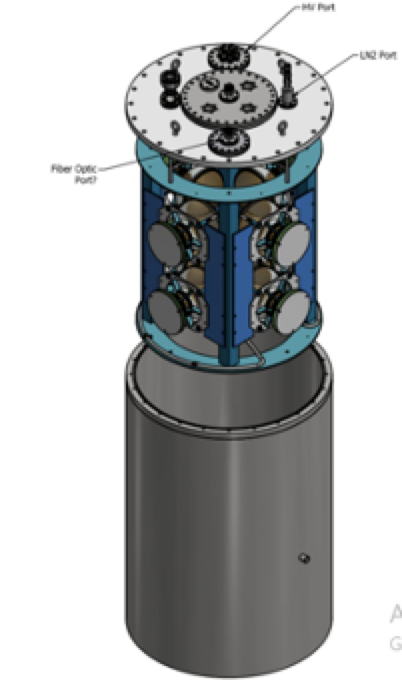
CAD cutaway and elevation views of the CCM detector
CCM200 detector CAD showing the liquid-argon vessel and 200-PMT detector structure.
How CCM200 works

From the accelerator beam to a measurable signal

01

Accelerator-driven particle source

An 800 MeV proton beam from the LANSCE linear accelerator strikes a tungsten target at the Lujan Center. This produces neutrons as well as charged and neutral pions. Charged pions stop and decay, providing a well-characterized source of approximately 30 MeV muon neutrinos. Neutral pions produce high-energy photons, providing a potential pathway to accelerator-produced sub-GeV dark matter.
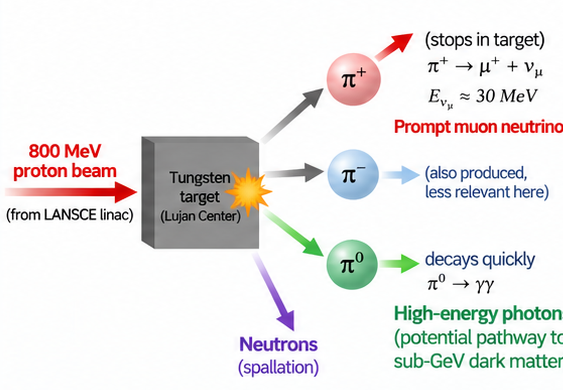
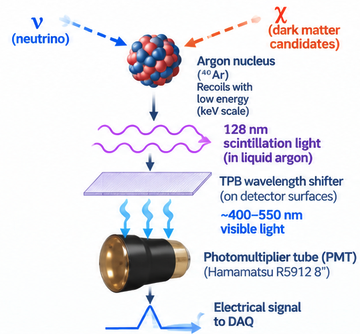
Diagram of the LANSCE proton beam striking the tungsten target and producing neutrons, charged pions, neutral pions and prompt muon neutrinos
02

Detection in liquid argon

Neutrinos or dark-matter candidates can scatter from argon nuclei in the liquid argon. A recoiling argon nucleus produces 128 nm scintillation light. Tetraphenyl butadiene (TPB) coatings wavelength-shift this light into the visible range, where it is detected by the PMTs and digitized by the DAQ system.

Diagram showing neutrino or dark-matter-candidate scattering in liquid argon, scintillation, TPB wavelength shifting, PMT detection and DAQ signal
03

Timing and energy separate signals

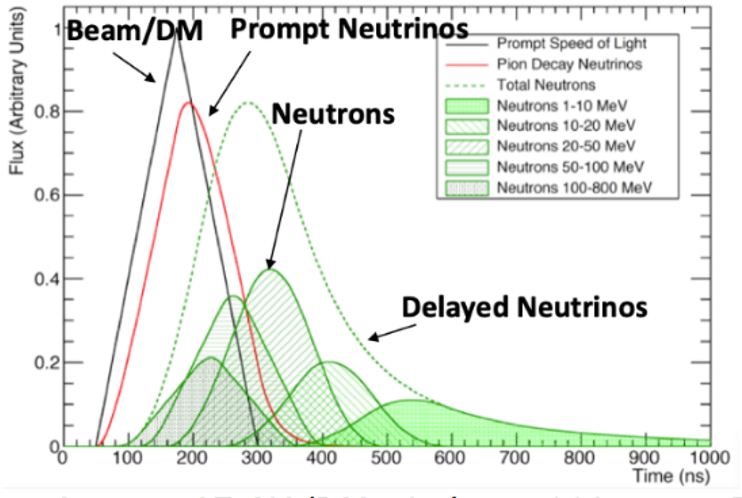
The time structure of the LANSCE beam helps distinguish prompt neutrino and potential dark-matter signals from beam-related neutron backgrounds. Reconstructed energy, timing and event rate are used with pulse-shape and veto information to separate candidate signal populations from backgrounds.

Original CCM beam timing plot showing beam and dark-matter timing, prompt neutrinos, neutron populations and delayed neutrinos
My role

Detector construction through commissioning and operations

My work included detector construction and upgrades, PMT hardware, installation, system power-up and testing, commissioning, monitoring / DAQ support, troubleshooting and optimization during operation.

Build-to-operations progression

From individual PMTs to an operating 200-channel detector

The sequence below follows the work from component construction and liquid-argon testing through detector integration, installation, commissioning, monitoring and whole-detector characterization.

Stage01

PMT construction & bench testing

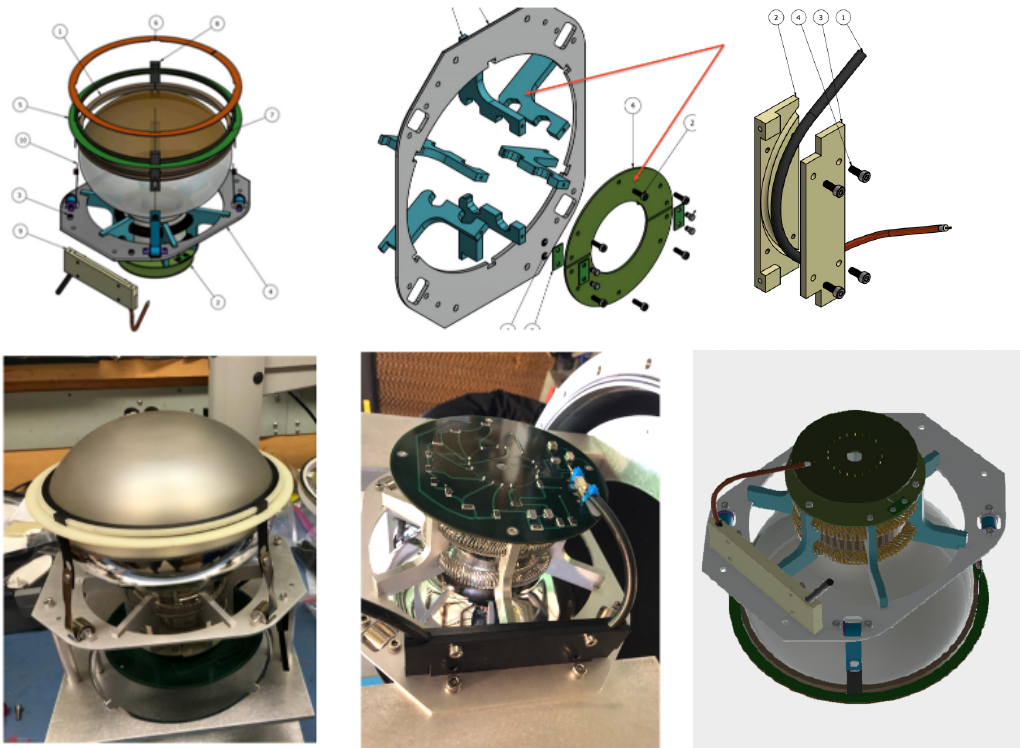
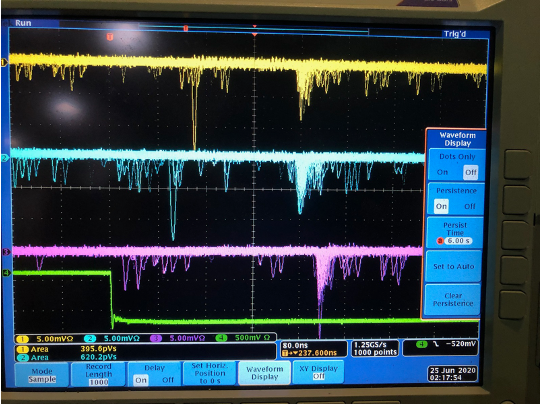
Individual photomultiplier assemblies were built and checked before detector integration. This included the PMT mechanical support, base / high-voltage hardware, cabling interfaces and direct oscilloscope checks of PMT signal behavior.

Stage02

Component-level testing in liquid argon

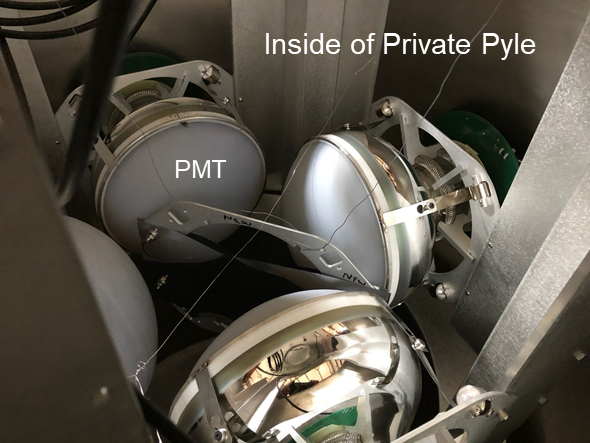
A smaller vacuum-jacketed liquid-argon cryostat (“Private Pyle”) was used to reproduce detector conditions before changes were implemented in CCM. PMTs, high-voltage / cabling components, optical hardware and wavelength-shifting materials could be tested at component scale.

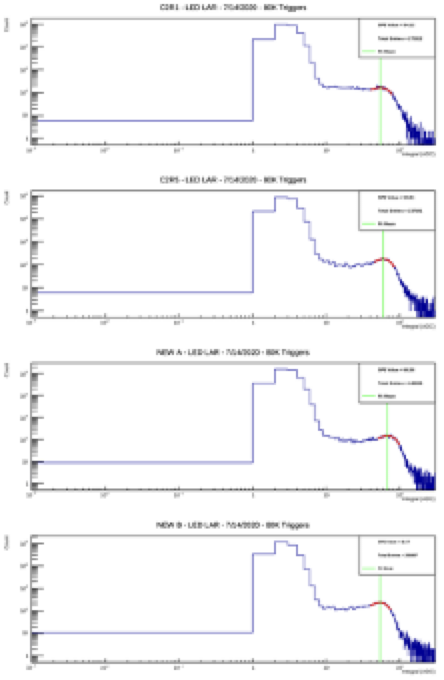
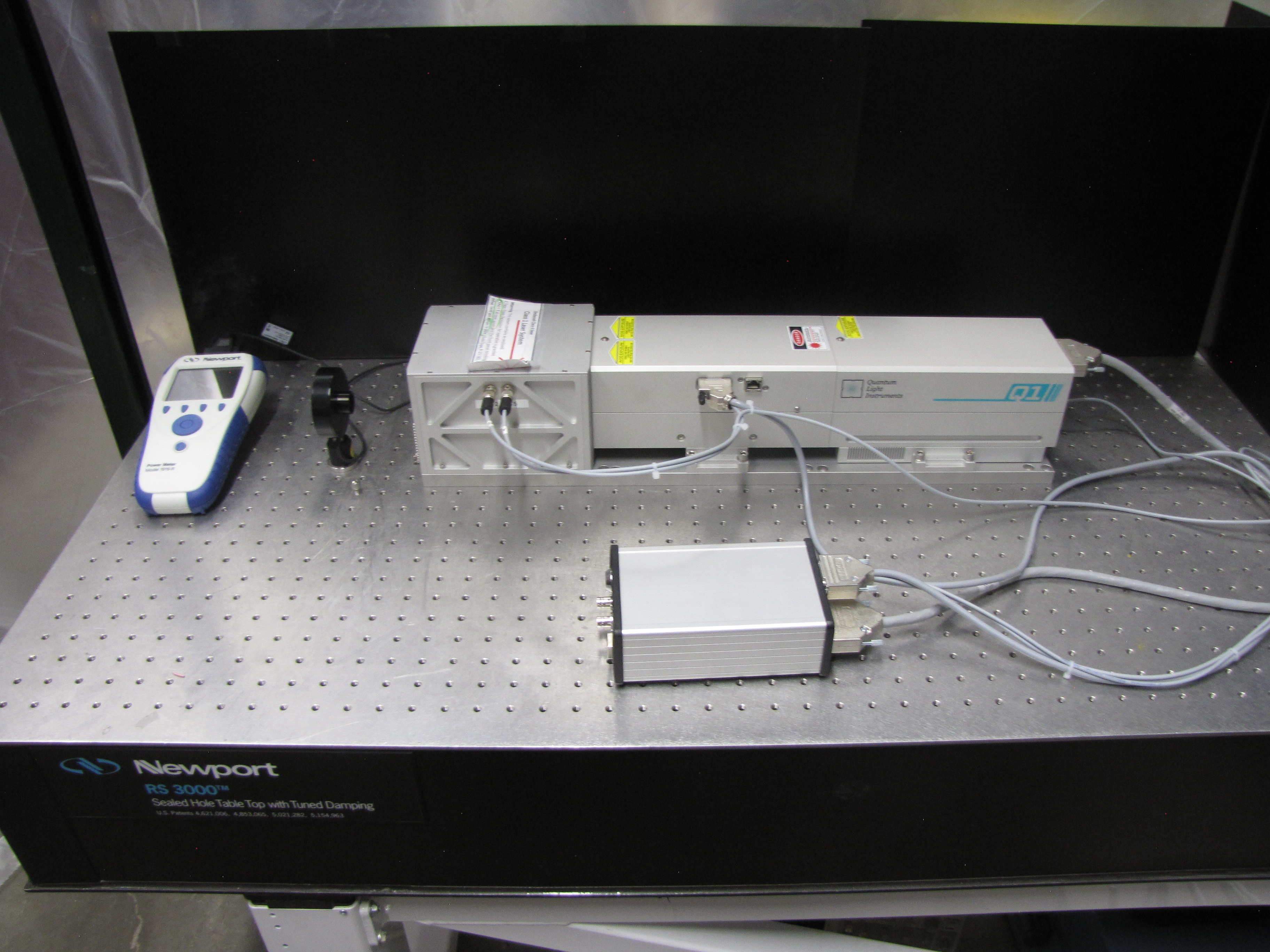
Test sources: ambient background, LED illumination, radioactive calibration sources and a Class 4 laser were used to characterize detector response and compare candidate components / configurations.
Stage03

PMT integration into the detector

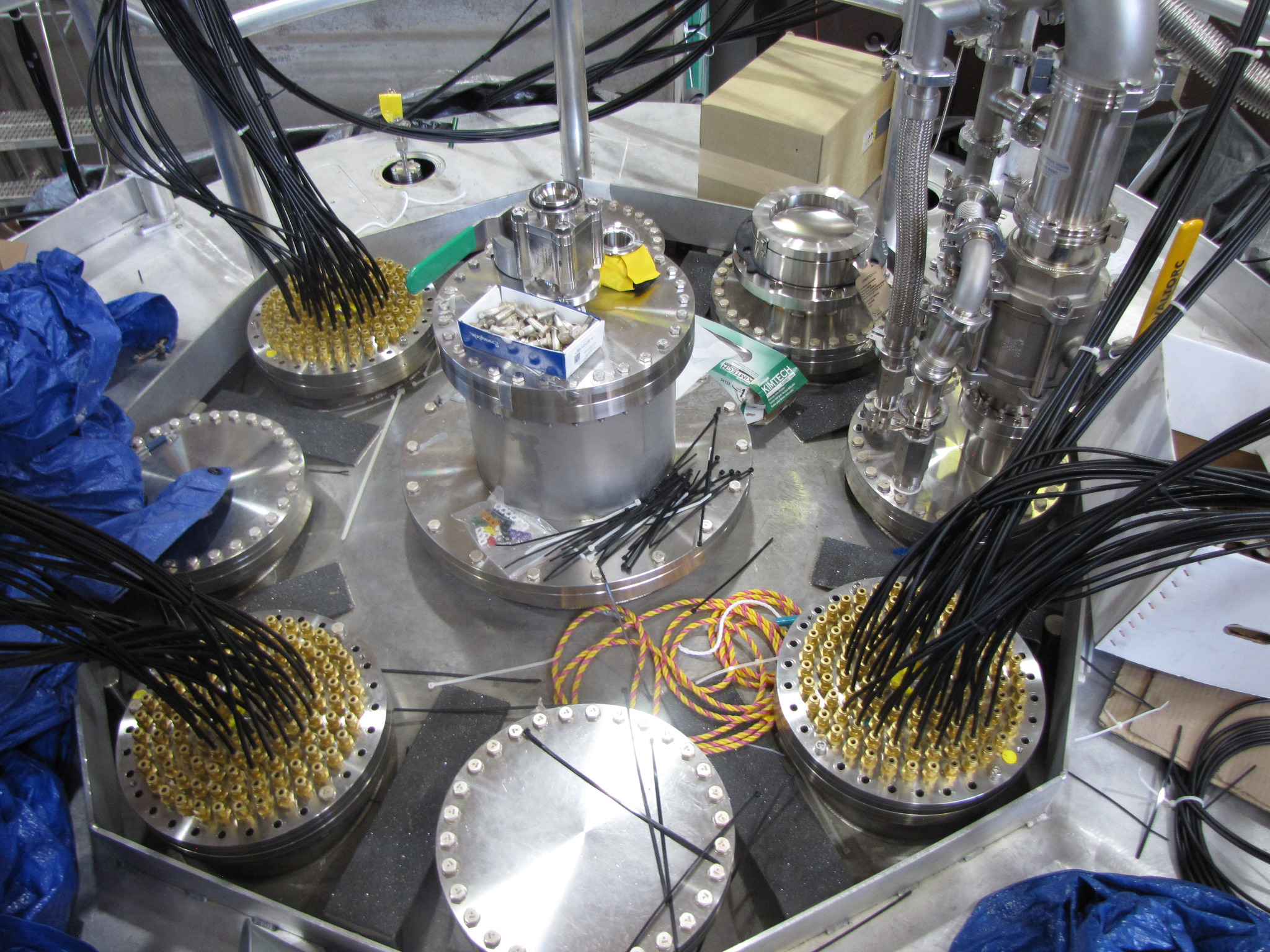
Qualified PMT assemblies were integrated into the detector with their high-voltage / signal cabling and feedthrough infrastructure. Testing then moved from individual assemblies to groups of installed channels so response and detector-level integration problems could be found before final installation.

Stage04

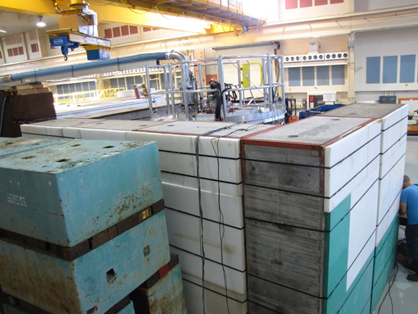
Detector installation at the Lujan Center

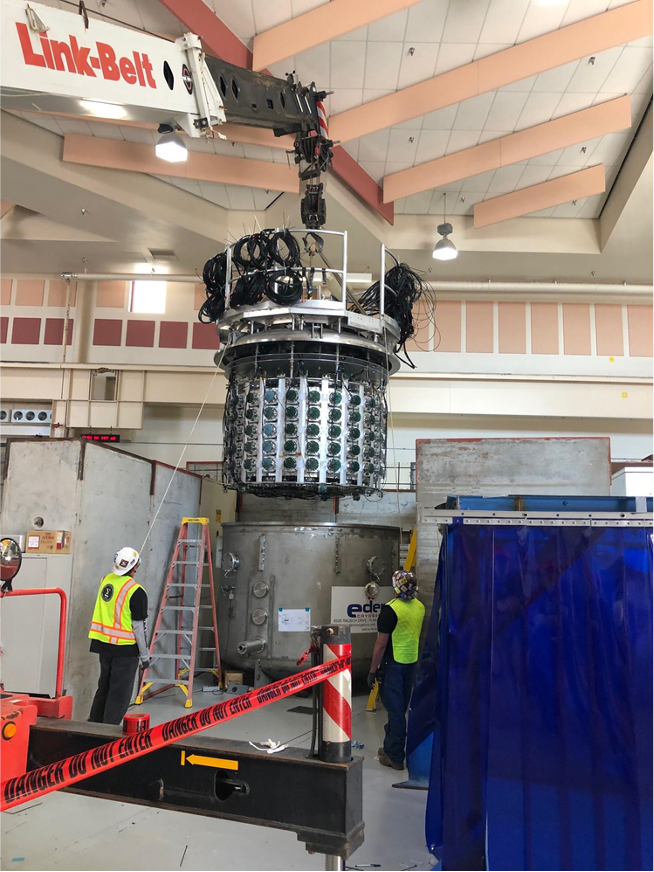
After assembly and subsystem checkout, the completed detector package was lifted and installed into the CCM cryostat / experimental position using a mobile crane that was driven into the experimental building. Installation required coordination across rigging, detector hardware, cabling, cryogenic interfaces and the surrounding experimental area.

Stage05

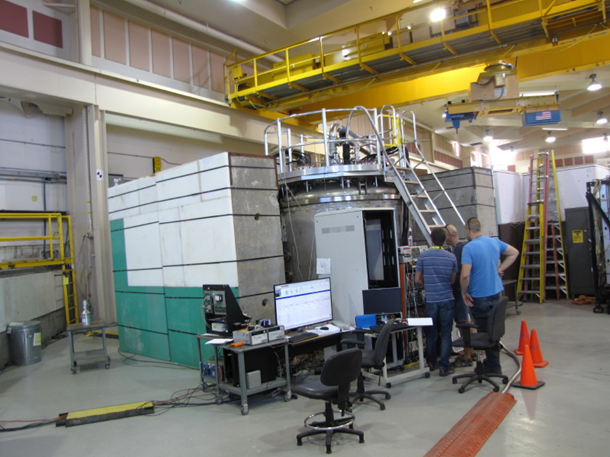
Initial detector commissioning in the experimental area

With the detector installed, testing shifted to the complete experimental configuration. The immediate goal was straightforward but important: determine whether the fully assembled detector, DAQ, instrumentation and surrounding experimental systems behaved correctly together after installation.

Stage06

Nearline processing for detector troubleshooting

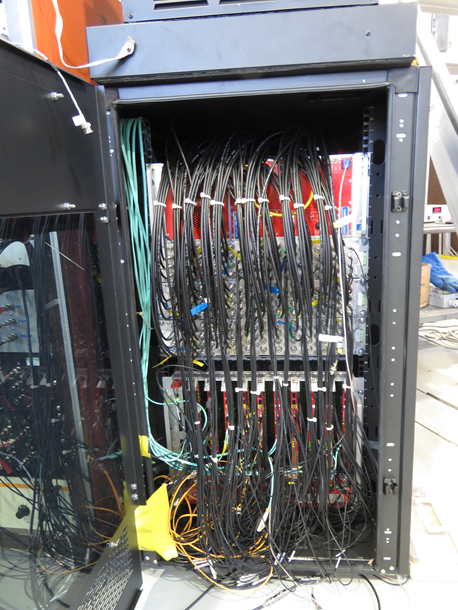
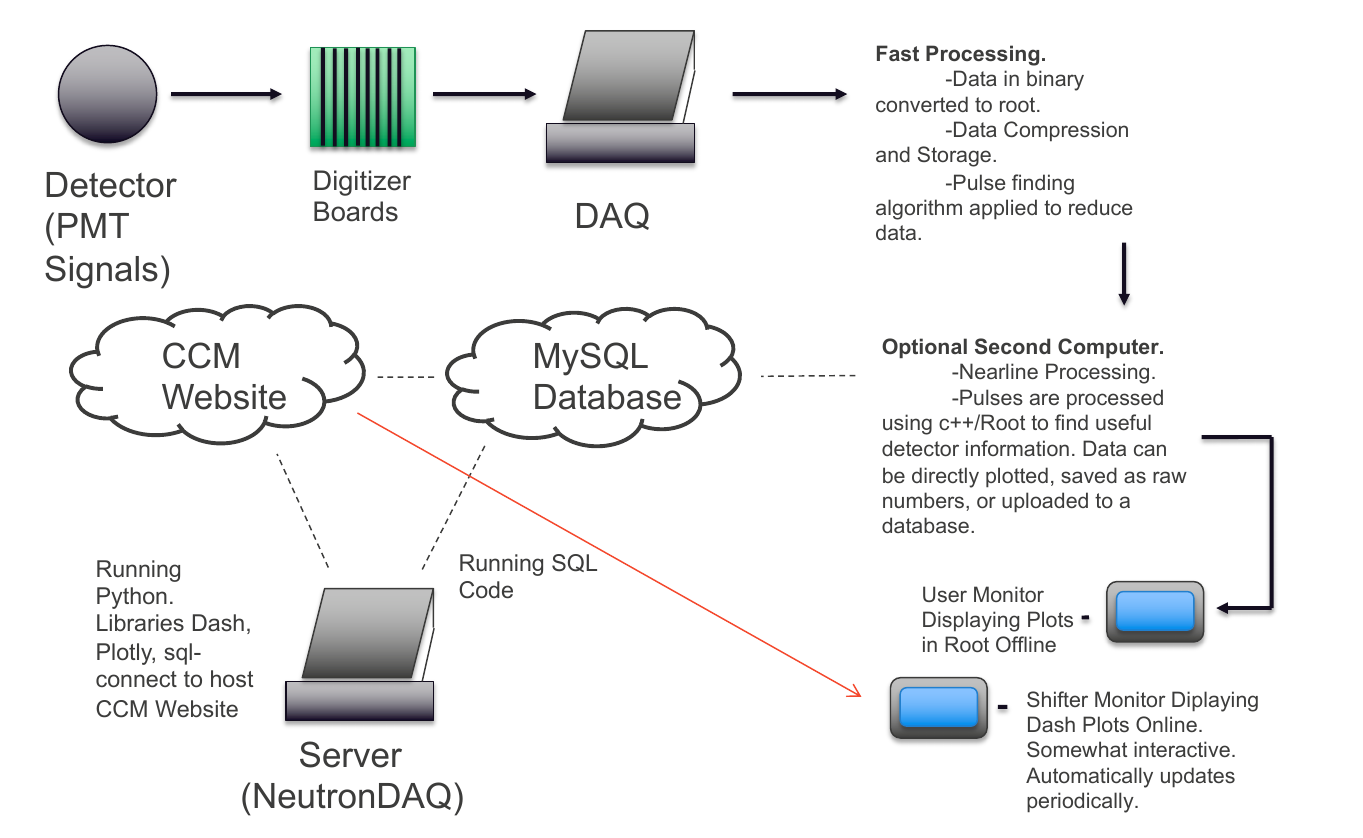
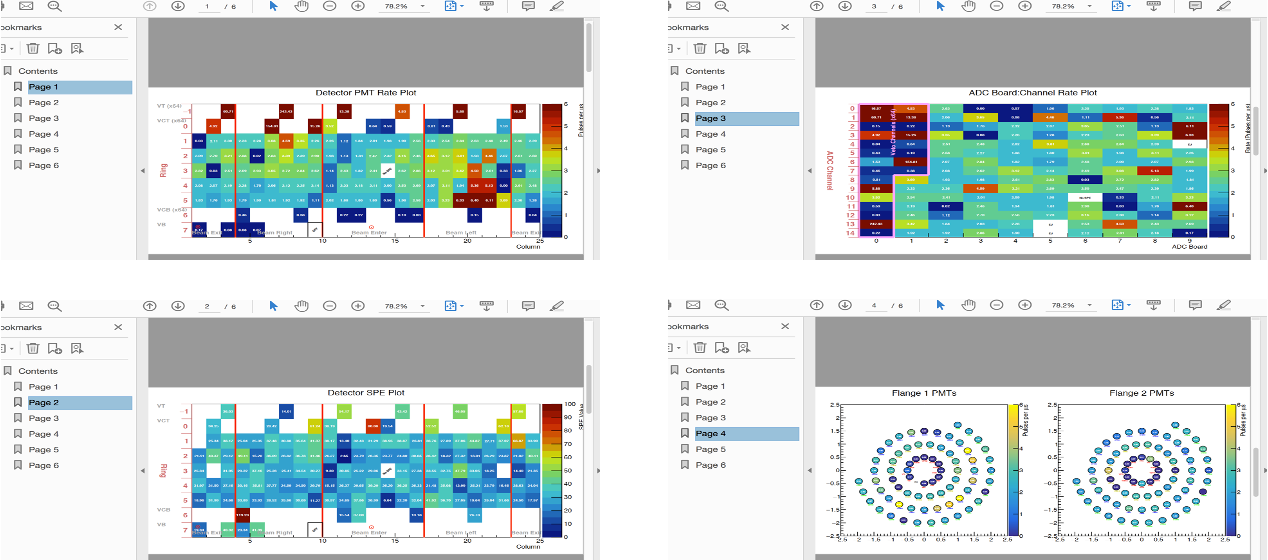
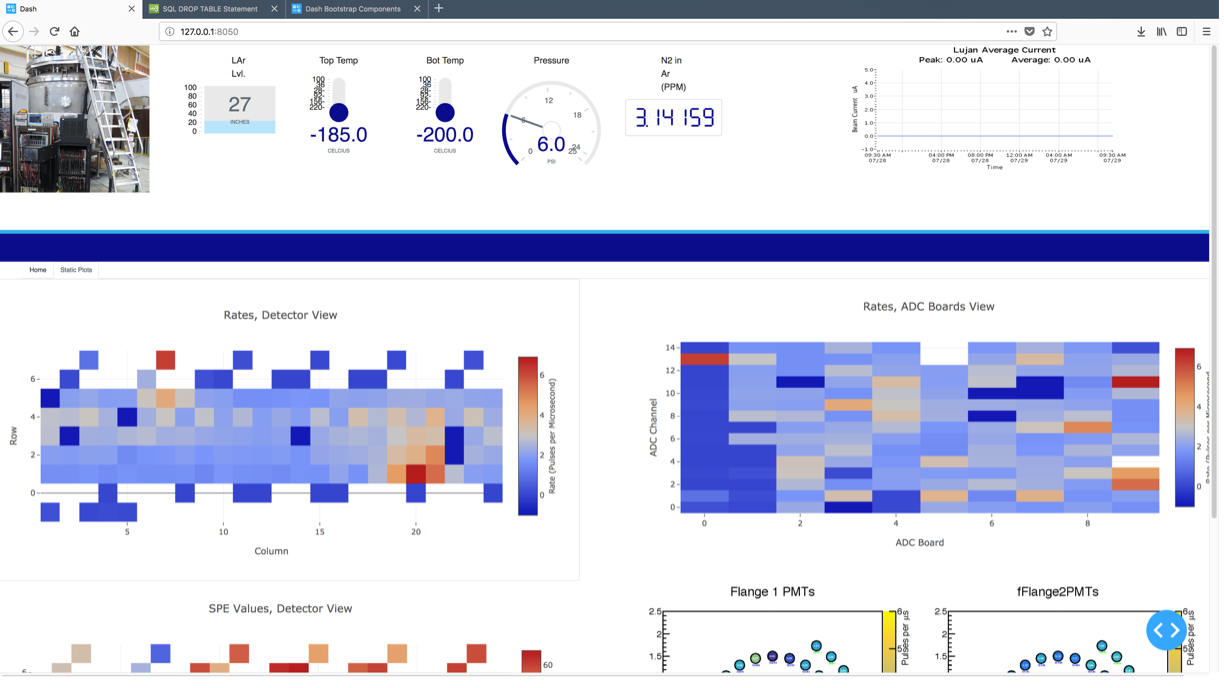
I developed nearline visualization tools so detector behavior could be evaluated at the PMT, detector, ADC-board / channel and flange levels rather than troubleshooting only from raw waveforms. This made channel-to-channel problems and spatial patterns much easier to recognize during commissioning and operations.

Stage07

Online monitoring for detector operations

Processed detector and environmental information was moved into a MySQL database and exposed through a web interface. This made detector-status information available online to experiment personnel and shift operators rather than limiting it to local analysis tools.

Stage08

Whole-detector characterization & response over time

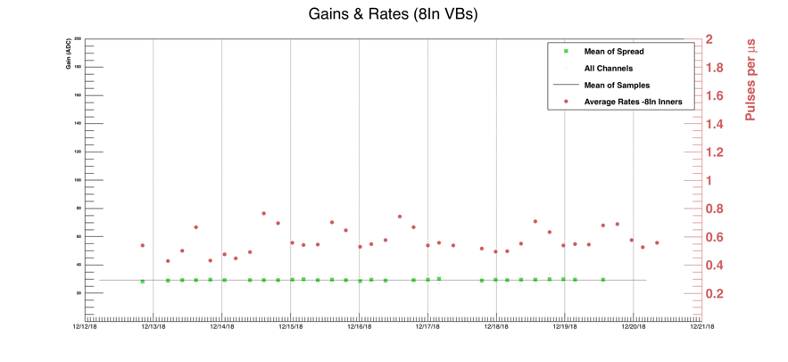
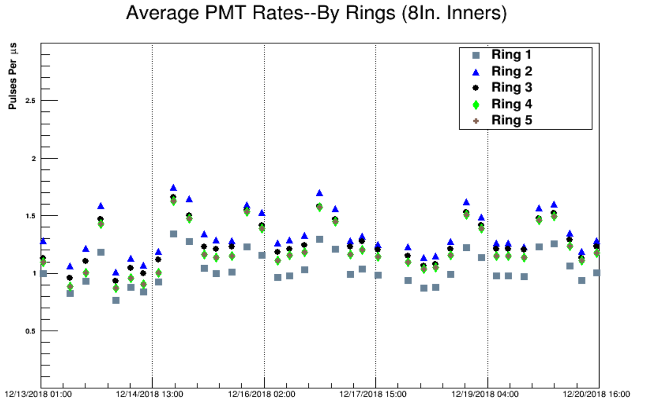
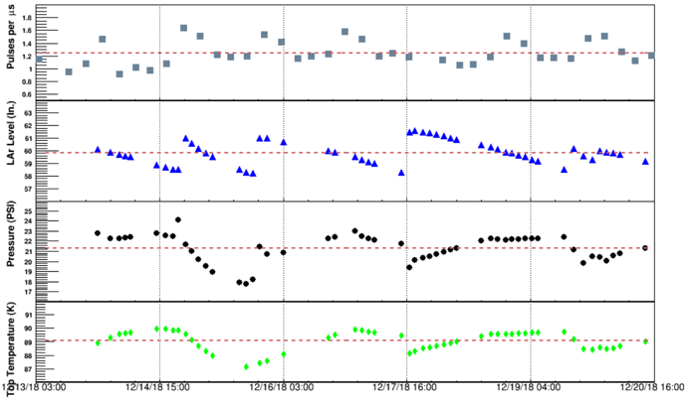
Once individual channels and subsystems were functioning, analysis shifted toward detector-wide behavior over longer periods. Gain and rate stability were evaluated across channels and detector regions, and PMT-rate trends were compared against liquid-argon level, pressure and temperature so changes in detector response could be separated from environmental or operating-condition effects.

Commissioning example

Using monitoring data to trace a detector-wide rate oscillation

During operation, PMT rates showed a repeating daily pattern. Comparing channel behavior and environmental timing pointed toward a light-related effect rather than a detector-wide electronics failure. Physical testing while watching the rates ultimately identified non-opaque fiber-optic through-port caps as the light-entry path. Covering the caps removed the identified leak mechanism.

Recognition
Coherent Captain Mills Experiment Team — LANL Large Team Award

The CCM team was recognized by Los Alamos for rapidly designing and operating a functioning particle-physics experiment using the 800 MeV LANSCE proton beam and the 10-ton liquid-argon detector. Terrance Schaub is listed among the Physics team members in the LANL award publication.

View LANL award publication →
Published feature

Scientific American

2020 · Scientific American

Hidden Neutrino Particles May Be a Link to the Dark Sector

Feature article on the CCM experiment, including published imagery of my detector work.

Open article →