Facility systems
Ultracold Neutron Facility Systems
The UCN facility converts high-energy spallation neutrons into ultracold neutrons that can be transported through guides and stored for precision experiments.
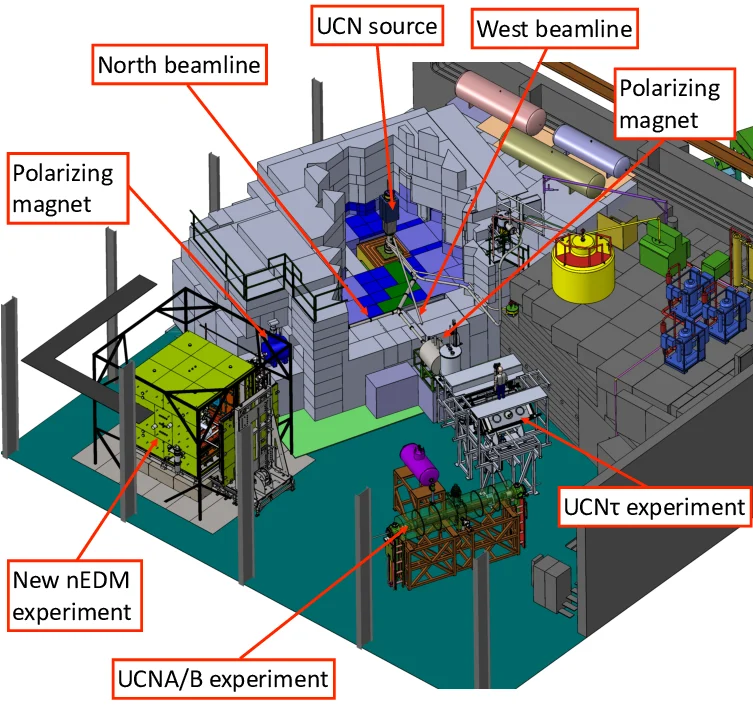
The UCN facility converts high-energy spallation neutrons into ultracold neutrons that can be transported through guides and stored for precision experiments.
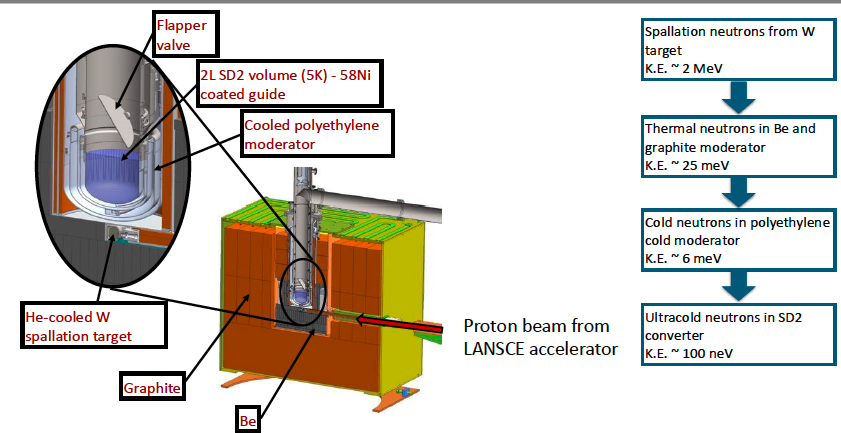
LANSCE protons strike a tungsten spallation target to create energetic neutrons. Successive moderator stages reduce their energy, and a solid-deuterium converter at cryogenic temperature produces the ultracold-neutron population used by experiments in Area B.
Unlike a single experiment, the UCN source and beamline are shared infrastructure: they produce, condition and transport neutrons to experiments such as nEDM, UCNτ and UCNA/B.
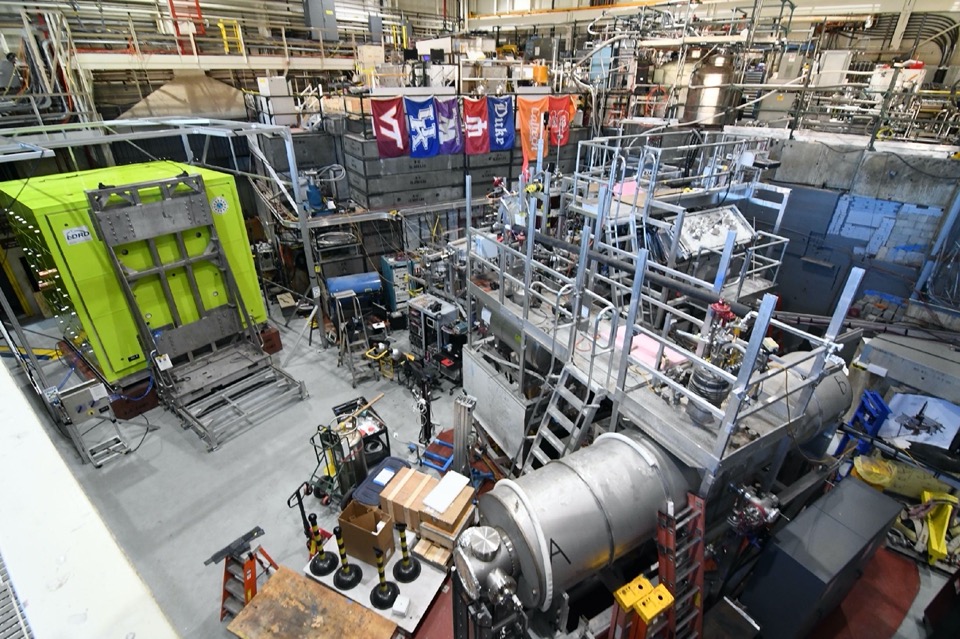
My responsibilities spanned nitrogen and helium distribution, helium-liquefier operation, superconducting-magnet support, vacuum pumping on primary UCN beamlines, deuterium-gas infrastructure, PLC/HMI controls, beamline pressure and temperature instrumentation, experimental-user integration and general facility hardware support.
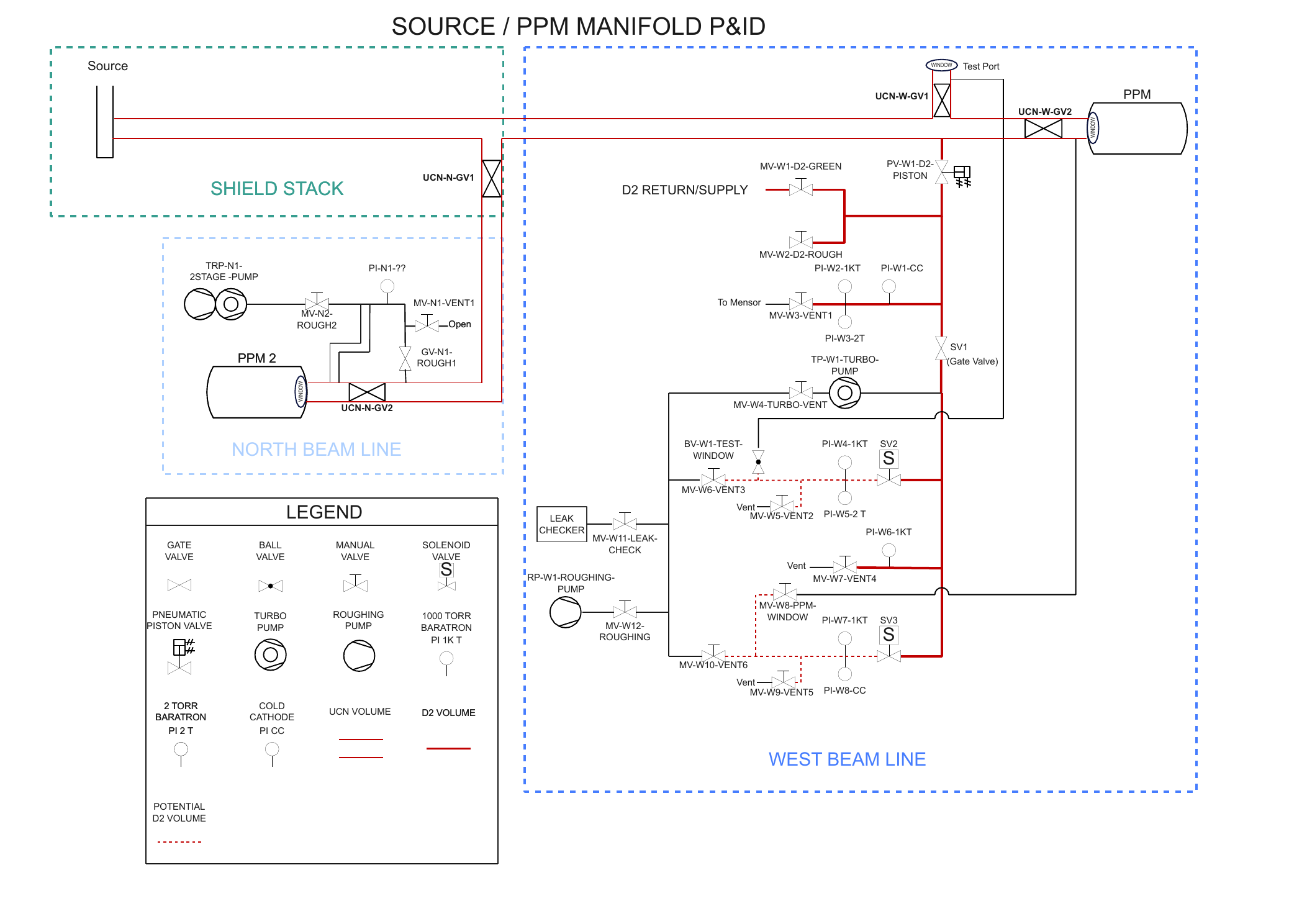
I developed this working P&ID in situ to document the as-operated source / PPM manifold for integration, operation and troubleshooting. It captures the source and beamline vacuum volumes, pumping equipment, valves, pressure instrumentation and deuterium interfaces.
Private draft: this working drawing is not represented as an issued engineering drawing and remains subject to external-use review.
I am a coauthor on this 2025 detector-development paper evaluating YAP:Ce and LYSO:Ce powdered scintillator screens for ultracold-neutron detection. Because this work concerns UCN detector development broadly rather than the UCNτ lifetime measurement itself, I list it with the UCN facility work rather than as a UCNτ publication.